Hosted by Water@UW–Madison and Wisconsin Sea Grant
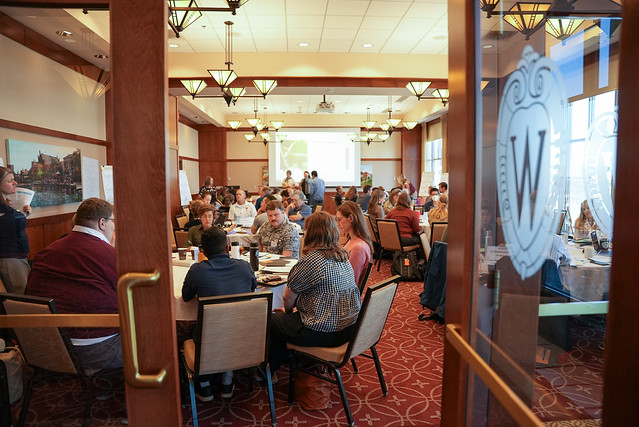
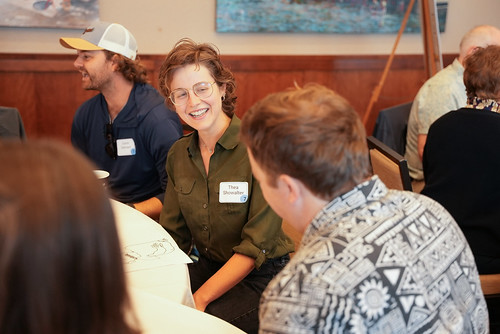
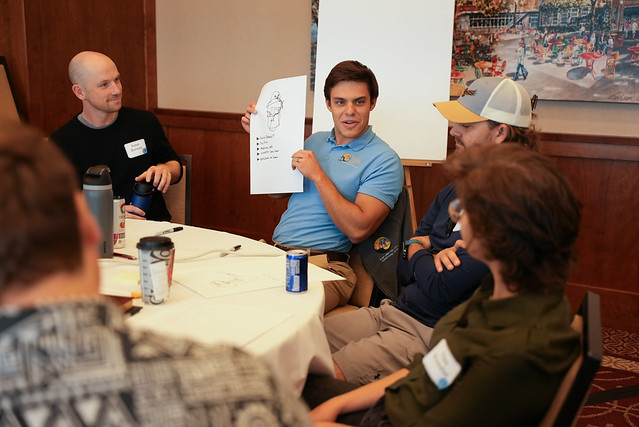
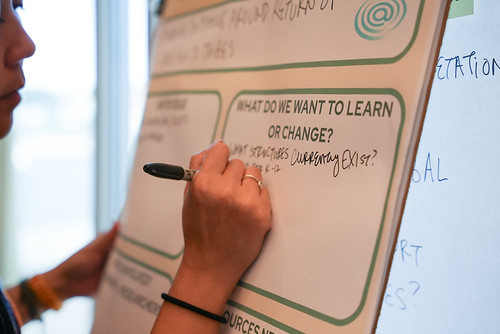
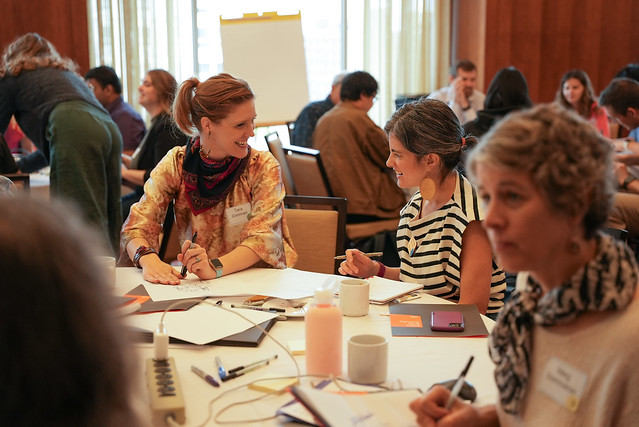
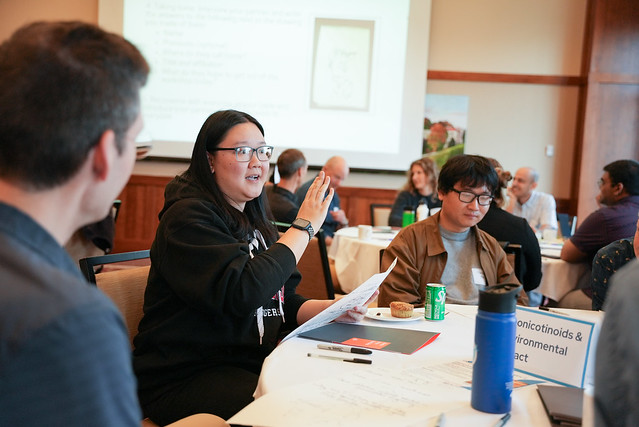
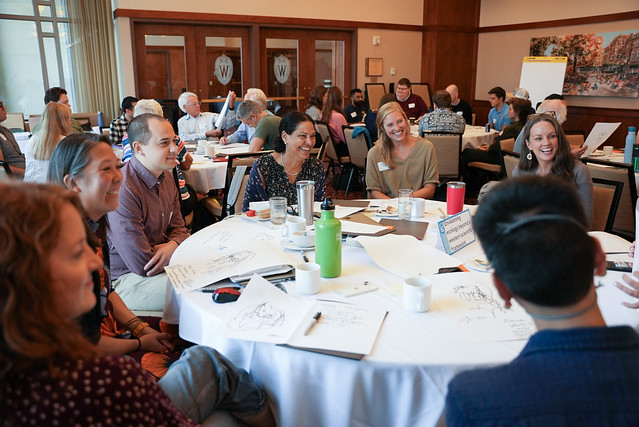
On September 11, 2025, 74 researchers, community members and outreach staff from across Wisconsin convened to explore collaborative solutions to contemporary water challenges. Through facilitated discussions at eight themed tables, participants identified shared concerns, exchanged knowledge, and co-developed ideas for future research and action.
Here are the eight discussion topics, along with the one big takehome that emerged from each table.
Agriculture & Water Quality
Farmers need better tools to navigate tradeoffs between organic and conventional practices, with a focus on erosion, herbicide use, and water quality.
Dam Safety & Flood Management
Aging infrastructure in the Coon Creek watershed presents opportunities for community-led flood preparedness and innovative planning.
Environmental Communication
Outreach on contaminants like PFAS and microplastics must be culturally relevant and accessible to reach the broadest possible audience.
Pesticide Impacts
Neonicotinoids are a class of pesticides whose use is linked to ecological decline; farmers and researchers are exploring integrated pest management and policy reform.
Urban Development & Trout Streams
Rapid growth in Dane County raises concerns about stormwater practices and their effectiveness in protecting sensitive ecosystems.
Tribal Perspectives on Water
Tribal communities are leading efforts to uphold their water rights and integrate tribal knowledge and knowledge systems into stewardship and policy.
Emerging Contaminants
Fragmented data and limited testing capacity hinder understanding of cumulative risks; coordinated efforts are needed.
Madison Lakes Health
Community groups are mobilizing around phosphorus reduction and legacy sediments and public education to restore lake ecosystems.
What’s next?
Participants proposed concrete actions including tool development, public education campaigns, participatory science initiatives, and new partnerships. These efforts aim to strengthen community engagement, inform policy, and advance water resilience across Wisconsin.
Is this work relevant to me?
We’ve captured the needs and project ideas generated during the workshop. They are available through the Download Report button below. We think they could be particularly relevant to those in the following sectors. If you see yourself anywhere in the list below, you might want to check it out!
Environmental Science & Engineering
- Water quality, contaminant monitoring, infrastructure modeling.
Agronomy & Agricultural Economics
- Sustainable farming practices, pesticide policy, decision-support tools, modelling toolsets
Urban Planning & Hydrology
- Stormwater management, land use impacts, groundwater movement
Public Health & Epidemiology
- Exposure pathways, risk communication, and community health data
Tribal Studies & Law:
- Sovereignty, co-management frameworks, and cultural knowledge integration.
Science Communication & Education
- Outreach strategies, participatory science, and curriculum development.
Agenda
September 11, 2025
Fluno Center
Water@UW-Madison is a cross-disciplinary network of water researchers pursuing community-engaged & policy-relevant research that serves the needs of the state, its people, and the environment.
Workshop objective: Cultivate collaborative relationships between the interdisciplinary experts at Water@UW-Madison and community groups dedicated to addressing water challenges. The primary objective is to initiate and nurture enduring partnerships between researchers and community leaders, ultimately fostering community-engaged research projects.
Agenda
| Time | Topic |
| 9:00AM | Welcome and introduction |
| 9:15AM | Morning inspiration keynote |
| 9:45AM | Roundtable introductions |
| 10:10AM | Morning break (refreshments provided) |
| 10:30AM | Get to know the community |
| 10:45AM | Project Development – Part 1 |
| 11:30PM | Lunch |
| 12:15PM | Discussion: Resources and sustaining the work |
| 12:30PM | Project Development – Part 2 |
| 2:00PM | Report-out and wrap up |
| 3:00PM | Informal networking time (optional) |
| 4:00PM | Adjourn |
These are the topics that will form the basis of the Water Partnership Workshop project discussions:
Organic and conventional farming tradeoffs.
There is disagreement on the costs, benefits and tradeoffs between conventional and organic farming. Many say that organic farming can’t feed the world, or that organic farming is “worse” for water. Others hold that conventional agriculture following soil health practices (e.g. no-till farming) requires too much herbicide. There is tension between awareness of these issues in the general public and institutions. More information and greater nuance would help conflicting groups better navigate these conversations.
Dam decommissioning and agency decision making.
Dam failures can be devastating, releasing destructive amounts of water that can have substantial effects on peoples properties and livelihoods. Federal and state review processes are slow and some report they have not sufficiently understood or incorporated local knowledge gained from public comment processes. As more and more of our aging infrastructure enters review phase, there is an opportunity to rethink the way we manage flooding. As we lose structural flood control, how might we collaboratively manage waterflow? Can community capacity, concerns, and anxieties be more fully addressed in current review processes? Are other states following processes we can learn from?
Enhancing the reach of science communication on timely environmental issues
Effective, expedient communication about emerging environmental concerns is necessary to inform and empower the public to make decisions related to public health & the health of the environment. Equitable and culturally-relevant communication can increase participation in environmental quality and conservation efforts, inspiring more communities to take action. However, social and language barriers reduce the efficacy of translation and outreach efforts. Priority work areas include microplastics, PFAS, climate change and lead. There are opportunities to think more critically about communications, beyond translation by considering culturally-relevant framing and messaging. How do we adapt scientific knowledge or existing outreach tools to effectively engage audiences?
Neonicotinoid insecticide application and environmental impact.
Recent monitoring reveals the presence of neonicotinoid insecticides in water samples taken from Black Earth Creek Watershed. At the same time, long term aquatic macroinvertebrate data collected by the state reveal declines in certain aquatic invertebrate populations. There is a growing need to better understand the links between the use and application of neonicotinoids and the status and trends in aquatic macroinvertebrate populations – including geographic dimensions, direct and indirect impacts.
Do urban stormwater practices protect trout streams?
As demand for new and affordable housing continues to rise, urban development is rapidly expanding into fringe areas. To mitigate the ecological impacts of increased impervious surfaces, stormwater best management practices (BMPs)—such as filter strips, swales, and grassed terraces—are commonly implemented to promote infiltration and reduce runoff. However, questions remain about the real-world effectiveness of these practices in protecting sensitive aquatic ecosystems. In Cross Plains, a significant new development is planned near Festge Springs, a critical groundwater source that feeds Black Earth Creek—one of Wisconsin’s premier trout streams. Might this present an opportunity to better understand the benefits and potential unintended consequences of current stormwater management practices?
Envisioning ecology beyond a western scientific framework
How can we reimagine water research so it recognizes long-term ecological relationships and responsibilities that extend for seven generations? We invite participants to name and critique Western knowledge-generation paradigms and engage with Indigenous knowledge systems, intergenerational ethics, and explore ideas that uphold the rights of non-human beings and entities. We hope to create dialogue among long-term ecological researchers, legal scholars exploring issues related to rights and standing, policy analysts, and science communicators interested in visioning new frameworks for ecological stewardship and inherent rights. This conversation is rooted in Indigenous perspectives and aims to inspire transformative approaches to water governance, regulation, research, and communication that center future generations of human and non-human beings.
Emerging contaminants & cumulative impacts: prevalence, impacts, risk, communication
We are starting to learn more about the prevalence and effects of emerging contaminants of significant health concern, including PFAS, heavy metals, compounds like 6-ppd and 6-ppdq, microplastics, pharmaceuticals and personal care products, but there is still much to learn. In particular, very little is known about the potential impacts of mixtures of emerging contaminants, how those mixtures vary by region, and their unique effects on populations. This information gap exists as concerns about surface water and drinking water are growing, indicating a need to continue work to understand public and environmental health effects, mitigation strategies, and remediation in ways that are culturally-informed and appropriate. We see opportunities to incorporate traditional ecological knowledge into future investigations, while also ensuring that communications and risk assessments are inclusive, culturally relevant, and accessible to all communities.
Management pathways to a healthy future for the Madison lakes
Madison lakes face unique challenges in a watershed that is heavily urbanized and agricultural. Eutrophic lakes like Kegonsa and Waubesa have manifold management goals and research questions related to nutrients, algal blooms, water levels, and aquatic plants. For one example: phosphorus inputs can vary geographically at a small scale and may have localized impacts that affect lake management outcomes. As another example: understanding how to conduct aquatic plant harvesting more strategically might help support achieving water quality goals. In the big picture, we desire a better understanding of what is “healthy” for our lakes to ensure we are implementing the best actions that produce measurable positive changes for these uniquely valuable ecosystems.
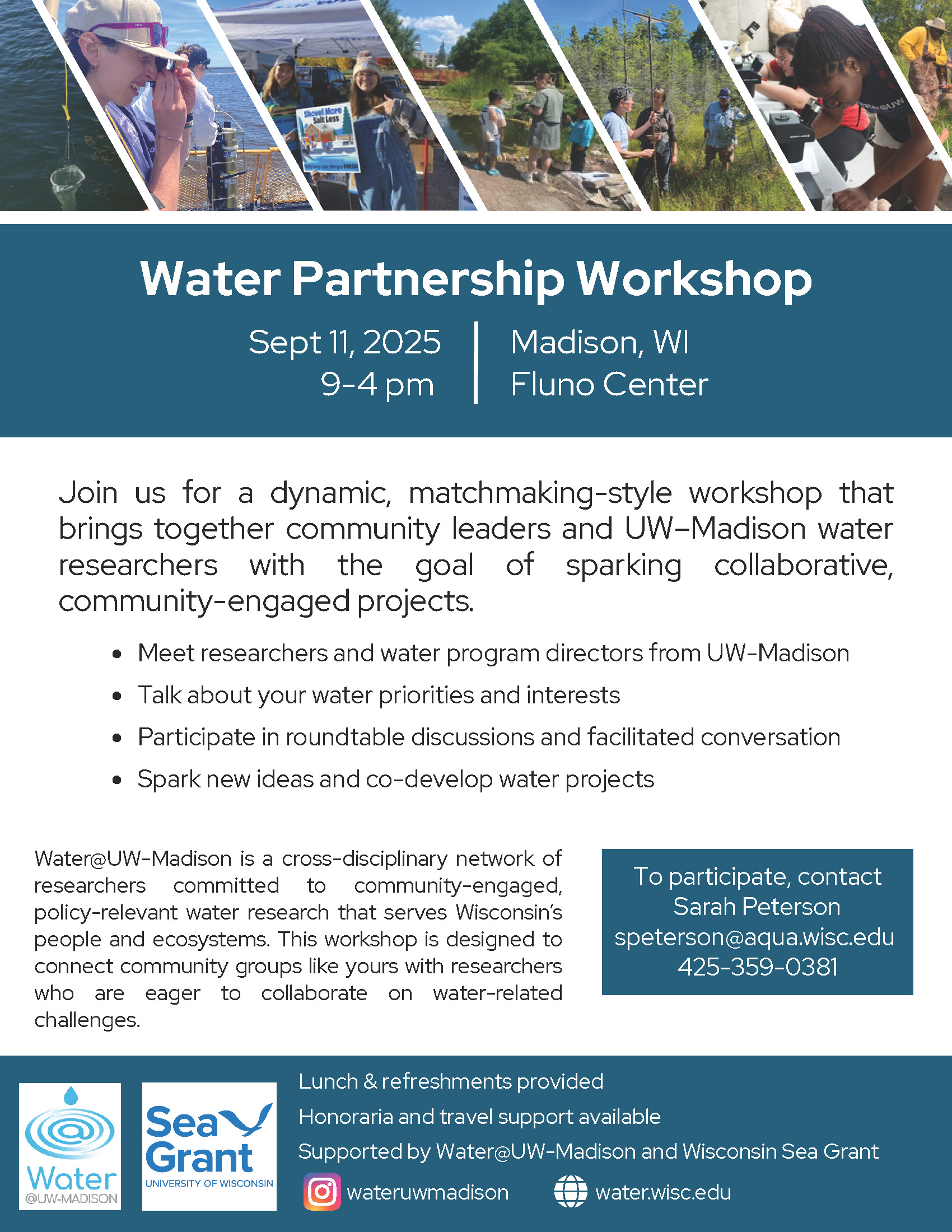
We’re hosting an opportunity to collaborate with researchers from the University of Wisconsin–Madison at our upcoming Community Partnership Workshop on September 11, 2025, in Madison.
This event is designed for community groups and organizations working on water-related issues—such as water quality, climate resilience, wastewater, or emerging contaminants—who are interested in shaping research that directly supports their goals and priorities.
What to Expect:
- When: Thursday, September 11, 20225
- Time Commitment: 6–7 hours (lunch and refreshments provided)
- Support: Honoraria and travel reimbursement for community participants
- Format: Facilitated roundtable discussions with UW–Madison researchers who share your interests
The workshop is a space to build relationships, share your priorities, and explore ideas for collaborative, community-engaged research. Think of it as a matchmaking event—connecting local knowledge with academic expertise.
Interested in participating? Reach out to Sarah at speterson@aqua.wisc.edu OR Water@UW-Madison at water@mailplus.wisc.edu