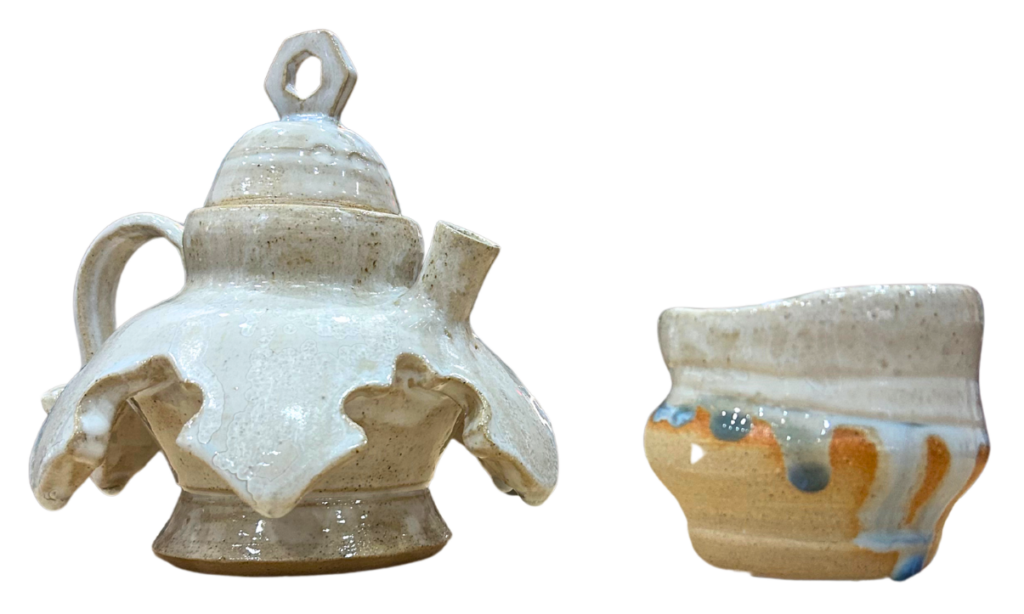
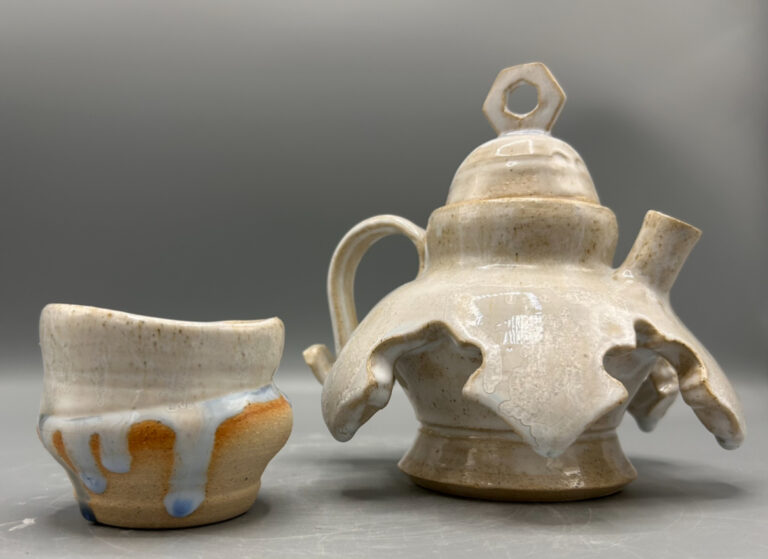
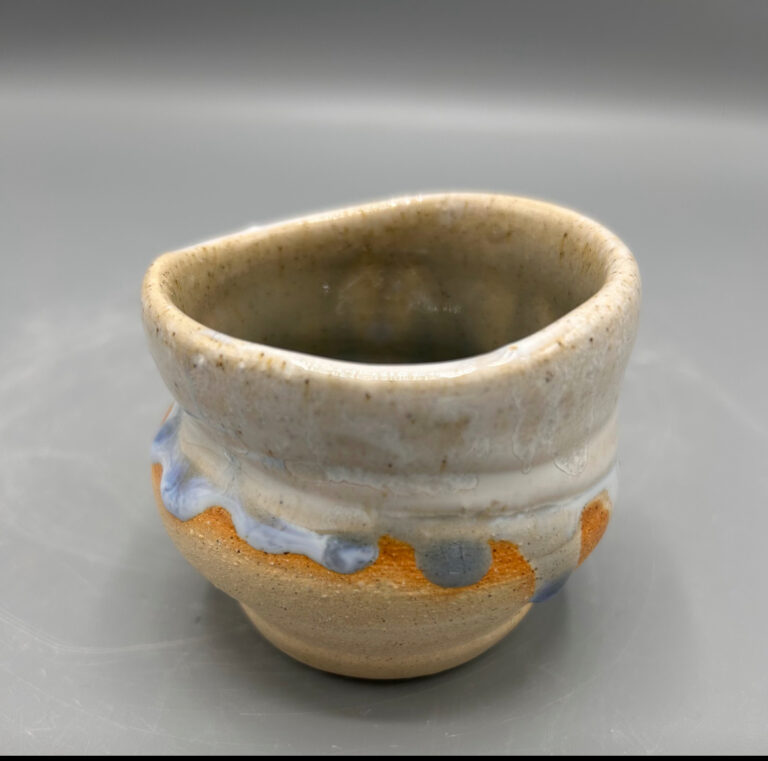
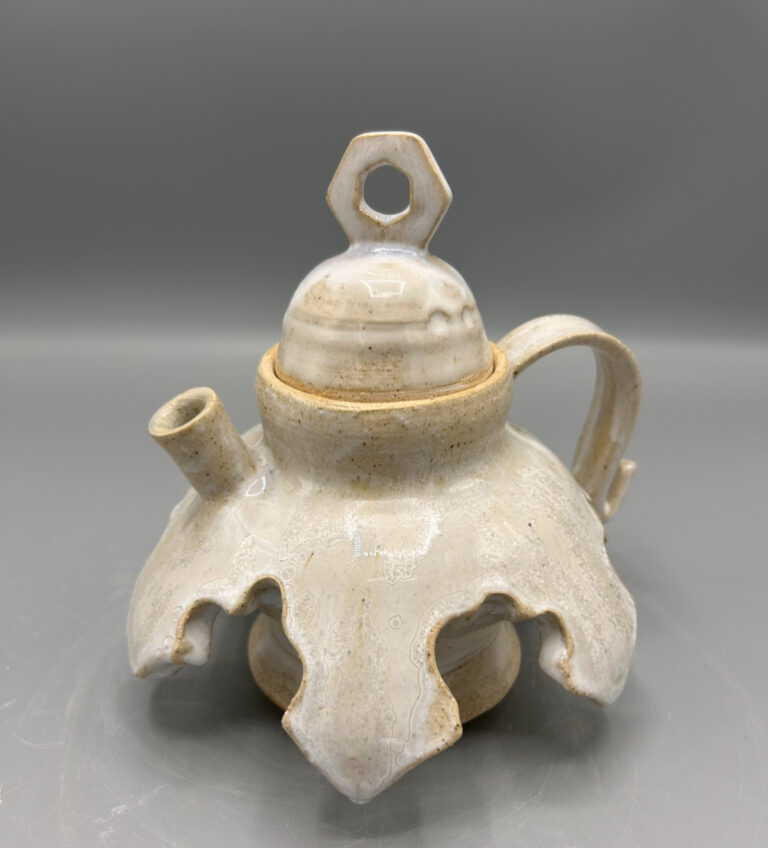
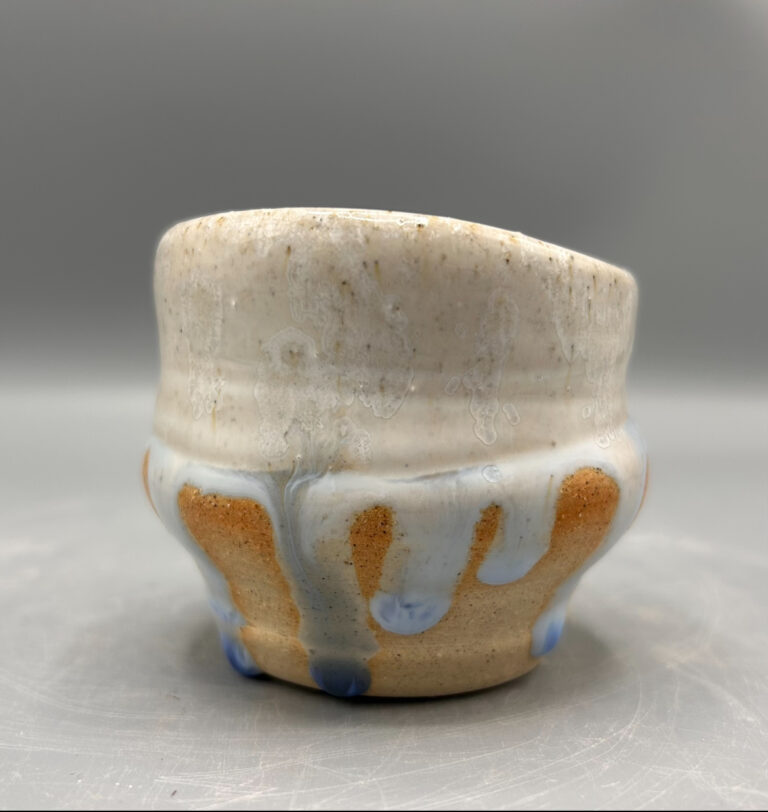
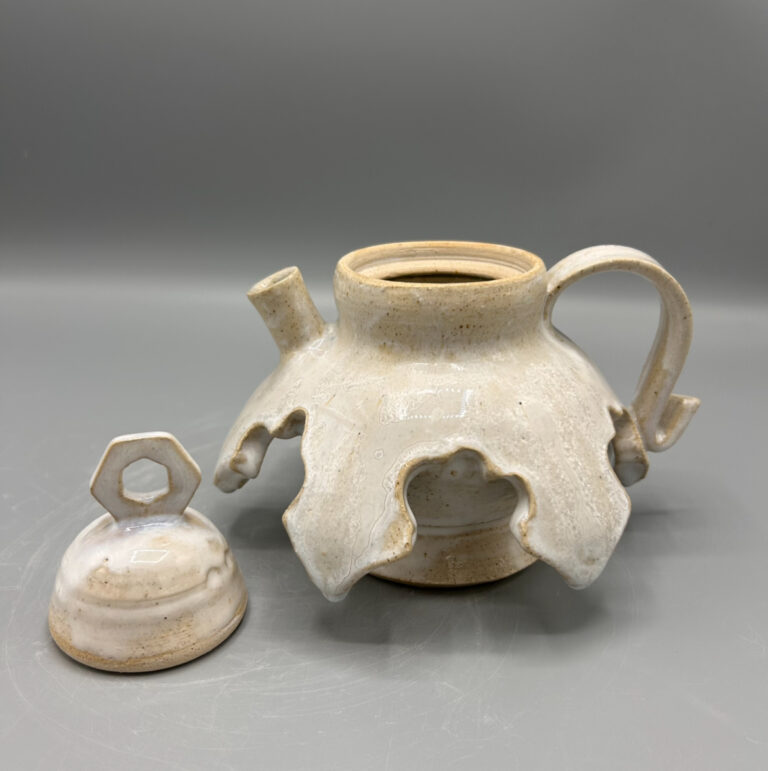
7 “x 7″ x 6 ¾” (Teapot) 3″ x 3″ x 2 ⅝” (Cup) Ceramic In collaboration with Dr. George Duffy, Atmospheric Science Professor at UW-Milwaukee
Clay can be fluid as water, and stubborn as earth. My work is a collaboration with clay, feeling the way it behaves and responding in turn to create something unique, beautiful, and functional. I focus on form and shape, but retain functionality for daily use. The journey that clay goes through echoes the many changes water goes through from solid snowflakes landing on your tongue, to puddles splashing beneath your feet, and steam coming off of a freshly brewed cup of tea. In discussion with Dr. George Duffy, the phase changes of water as well as the unlimited forms of snowflakes resonated with me and how I view altering clay forms. Throughout history, there have been countless hands altering clay forms, causing each handmade pot to be unique, like snowflakes. These pieces celebrate the ever changing nature of water.
ABOUT THE ARTIST
Macy Ortloff is from Greendale, Wisconsin, majoring in recreational therapy and minoring in visual art at the University of Wisconsin La Crosse. After graduation, she plans on attending graduate school for a degree in occupational therapy. Currently, she specializes in ceramics, metal smithing and blacksmithing, and will always make space for art in her life.
Teaching Assistant Professor, School of Freshwater Science
I have two broad areas of research with water I am interested in. I’ve done a lot of work with remote sensing of precipitation – using satellites and radars to measure falling snow and rain, which involves using highly accurate models of snowflakes and complicated 3- dimensional radar echoes to simulate backscatter.
I am also interested in the energy transfer from phase changes of water. Specifically, I have done some research to answer the basic question “does melting snow cool oceans and lakes?” There is a mind-boggling amount of energy that is exchanged in our atmosphere and ocean from phase changes – for example a hurricane is actually the most powerful event our planet is capable of producing, releasing thousands of atomic bombs worth of energy just through condensation of water.
I think science and art are similar expressions – I view my interest in science as a means to appreciate the natural beauty of the world, I figure a lot of creatives would say the same about their motivations for making art. I actually tried to start a class on science poetry a few years back, I’m just very into artists and scientists working together to best display their common love of the natural world.